
A Guide to Mitsubishi's Super All-Wheel Control (S-AWC)

While drivers in the past preferred to stick to well-established roads, today's drivers are more adventurous. Mitsubishi is always striving to meet the needs of its dedicated customers, so it's no wonder it has developed one of the most popular all-wheel drive systems on the market.
The iconic and in-demand Super All-Wheel Control (S-AWC) system is an optimized drivetrain you can experience by test driving select models here at Mills Mitsubishi. Before you settle in behind the wheel to feel what makes it so different, learn a little more about this popular option.
The History of Mitsubishi's All-Wheel Drive Legacy
You know you can trust the S-AWC system because it comes from the company that was the first in Japan to produce a vehicle with full-time four-wheel drive, all the way back in 1936. In the almost 100 years that have passed since that original design, the company has relentlessly updated and refined its approach to adaptive all-wheel traction.
What is All-Wheel Drive and How Does It Differ from 4-Wheel Drive?
A four-wheel drive system is activated only when necessary to provide power to all four wheels for improved traction on dirt and gravel roads. Both axles receive the same amount of power, which isn't always the best fit for on-road applications.
All-wheel drive is a passive, always-on system that detects when one of the axles is slipping. The power supplied to the front and back axles is constantly balanced to achieve as much traction as possible, maximizing safety on slippery roads, in turns, and on gravel and dirt surfaces. While four-wheel drive is primarily a feature that off-roading enthusiasts invest in, all-wheel drive can benefit all drivers. That's what the S-AWC system was developed by Mitsubishi and adapted to many of the latest models.
How is Mitsubishi's Super All-Wheel Control System Different?
When testing models on real-life roads and dangerous driving situations, Mitsubishi's design team wanted to go further when giving drivers the performance and control they needed to stay safe. That's where the S-AWC design comes in.
Instead of just balancing the power between the front and rear axles as groups like most all-wheel drive systems do, this drivetrain can increase the torque on individual wheels. You'll find this kind of torque vectoring feature primarily on racecars and luxury sports cars. Or you can save a lot of money and choose a Mitsubishi instead.
If you deal with wet summer storms, icy winter roads, or any other challenges in between those two seasons, you could benefit from this kind of adaptive all-wheel drivetrain. You'll enjoy less slipping, more control, and fewer tire wear issues despite your route involving roadway challenges. Proper torque distribution reduces heat generation in the brakes and tires, helping extend their lifespan and prevent premature failure. Weight distribution is adjusted as well so you're always getting a smooth ride, regardless of the outdoor conditions. It's just one of many driver safety features we offer here at Mitsubishi to protect what you care about the most.
Which Mitsubishi Vehicles Feature S-AWC?
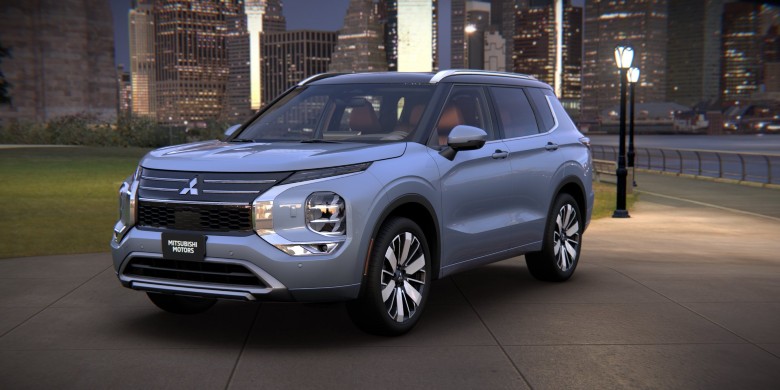
For many Mitsubishi models, this drivetrain comes as an optional upgrade. But for the Outlander, Outlander PHEV, and Eclipse Cross, it's the standard drivetrain.
There's no need to keep up with changing weather and road conditions and constantly make adjustments to the mode you're driving in. The S-AWC system runs silently in the background as you focus on traffic, adjusting torque and giving you the best possible driving experience with minimal input from you. In most cases, you won't even notice it's working.
You'll enjoy an uninterrupted, safe trip while leaving the hard work up to the torque vectoring system. It's based on the same design that engineer Kaoru Sawase first designed in 1996 to help the Mitsubishi Lancer win on the race track.
Why is S-AWC Great for Mills Mitsubishi Customers?
Iowa's climate may provide quite different driving challenges than Japan's, but Mitsubishi's designs are built to handle the conditions in our area as well. The Super All-Wheel Control drivetrain is a great fit for handling the state's notorious micro-weather outbursts that can suddenly flood highway surfaces in a matter of seconds.
It's also adaptable enough to maintain grip on icy roads when winter storms roll in, while also helping you deal with rural dirt and gravel roads when visiting local farms or family members. Once you experience the S-AWC difference, you're sure to understand how it can help your daily driving routine here in Davenport.
Experience S-AWC Live in Davenport
Come see us today at Mills Mitsubishi and test drive one of our models equipped with Super All-Wheel Control.
