
Is the 2026 Mitsubishi Outlander's S-AWC better than the CR-V's Real Time AWD for winter driving around Bettendorf, IA?
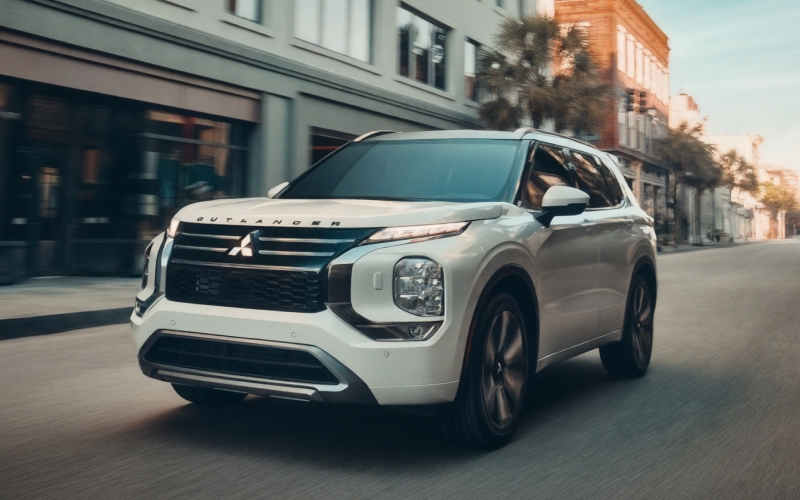
Mills Mitsubishi - Davenport - Is the 2026 Mitsubishi Outlander's S-AWC better than the CR-V's Real Time AWD for winter driving around Bettendorf, IA?
Many compact SUV shoppers want a confident winter companion, and this often sparks a focused question: Is the Mitsubishi Super All-Wheel Control system truly more capable than Honda’s Real Time AWD when snow and slush arrive around Bettendorf, IA? The answer starts with the fundamentals. While both systems can send power to the rear when the front slips, S-AWC was engineered to manage longitudinal and lateral grip — not just to engage the rear axle, but to actively influence yaw with precise torque distribution and targeted brake control. In practice, the system aims to keep the vehicle faithfully on the intended line, reducing the need for mid-corner corrections when a patch of ice or gravel surprises a morning commute. Honda’s Real Time AWD responds to slip effectively, yet it does not bring the same level of surface-specific logic or torque-vectoring nuance that defines Mitsubishi’s approach.
Going deeper, the 2026 Outlander pairs S-AWC with multiple selectable drive modes on compatible configurations — Tarmac, Gravel, Snow, Normal, and Eco — allowing drivers to align system behavior with conditions. That tuning informs how throttle, shift mapping, torque distribution, and stability logic coordinate, yielding a balanced, predictable response from driveway to interstate. The result is confidence when the crown of the road is slick, when the crossover transitions from plowed pavement to powdery side streets, or when refrozen afternoon slush hides beneath fresh flurries. With the Outlander, those transitions feel consistent because the hardware and software were calibrated to handle varying traction simultaneously on different wheels — a key reason S-AWC has earned a loyal following in northern climates.
By comparison, CR-V’s Real Time AWD remains a practical solution for light off-pavement excursions and unplowed parking lots. It adds welcome stability versus front-wheel drive, and for many drivers it will be sufficient. The difference appears when roads turn unpredictable — alternating grip levels on the left and right side of the vehicle, mid-corner frost heaves, or crowned intersections with polished ice near the stop line. Here, S-AWC’s ability to subtly brake an inside wheel, build rotation, and stabilize the vehicle’s attitude is the distinguishing advantage. Combined with the Outlander’s available 360° Multi-View Camera System for tight urban maneuvers and an available Head-Up Display that helps keep eyes forward, Outlander stacks multiple layers of winter-friendly confidence.
Drivers also appreciate how Outlander’s mild-hybrid 48-volt system smooths low-speed responses on cold starts and during stop-and-go traffic, when clumsy torque delivery can unsettle a vehicle on slick surfaces. Gentle, predictable launch with supportive torque from the BSG keeps the experience composed. Add Trailer Stability Assist and a 2,000-pound towing rating, and the Outlander becomes a practical winter utility partner for small sport gear trailers or a weekend ice-fishing setup.
For those building a shortlist, consider how each system addresses layered scenarios — uneven traction, off-camber turns, and variable surfaces in the same block. That is where the Outlander’s S-AWC shines. The calibration feels natural in daily use and unobtrusive until the moment it matters most. It is capability that you feel in the steering wheel and the seat of your pants rather than an icon flashing on a screen.
Mills Mitsubishi - Davenport presents test routes that simulate these conditions so shoppers can feel the difference for themselves, with our team serving Bettendorf, Cedar Rapids, and Moline. With the right tires for the season and S-AWC’s smart calibration, Outlander delivers the balanced composure that winter drivers expect — without asking owners to compromise on space, tech, or everyday comfort.
Frequently Asked Questions:
Does S-AWC help in both straight-line and cornering traction?
Yes. S-AWC manages power delivery and brake control to support longitudinal grip for acceleration and braking, as well as lateral stability in turns, helping the vehicle track true on mixed surfaces.
Do I need to select a drive mode every time I leave home?
No. Normal mode handles most conditions, but Snow, Gravel, and Tarmac modes fine-tune response for specific surfaces. Many owners set Snow on storm days and leave it there until roads clear.
How does Outlander improve visibility in winter parking lots?
The available 360° Multi-View Camera System provides an overhead view to spot snowbanks, curbs, and pedestrians. Available rain-sensing wipers and a Digital Rearview Mirror further enhance clarity.
Is there a learning curve to S-AWC?
Minimal. The system operates in the background, lending stability when needed. The steering remains natural, and drivers quickly gain trust after a few slick intersections.
