
Tire Rotation vs. Wheel Alignment in Davenport, IA
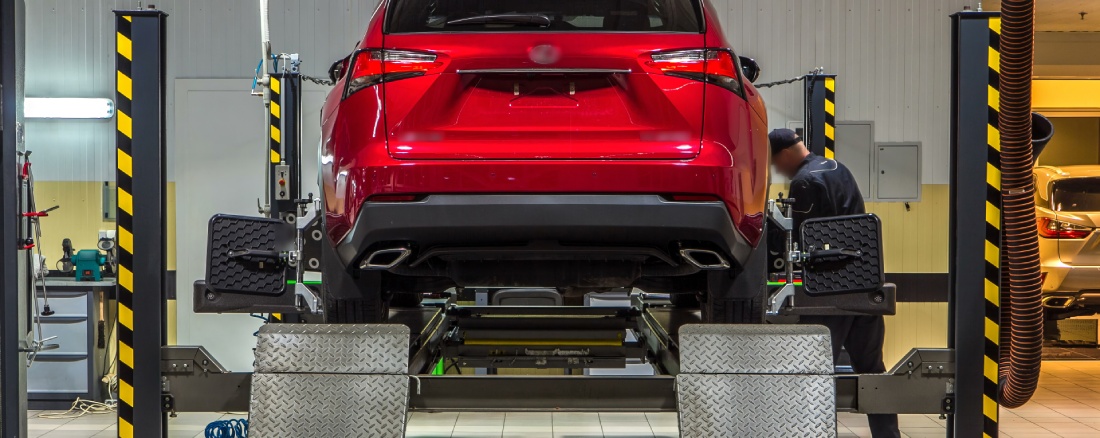
Tire rotation and wheel alignment are often mentioned together, but each service solves a different problem. A tire rotation moves tires from one position on the vehicle to another, such as front to rear or side to side, so tread wear stays balanced. A wheel alignment adjusts suspension angles so all four wheels point in the correct direction and meet the road at the proper contact points. For drivers in Davenport, IA, both services matter because daily routes can include city streets, riverfront roads, highway ramps, construction zones, and uneven pavement across the Quad Cities. At Mills Mitsubishi - Davenport, our service team helps drivers understand whether a vehicle needs a routine tire wear service, a steering and suspension correction, or both. Rotation mainly protects tire life and traction. Alignment mainly protects steering control, handling, fuel efficiency, and tire wear patterns caused by incorrect geometry. If your vehicle feels smooth but the front tires are wearing faster, a rotation may be due. If the steering wheel sits off-center or the vehicle pulls, an alignment check is the better starting point.
What Tire Rotation Does and How Often It Is Needed
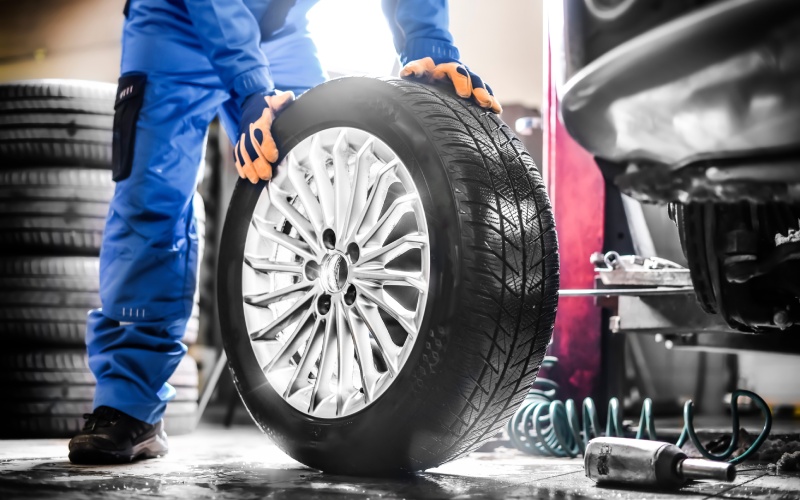
- Primary purpose: Tire rotation spreads wear more evenly across all four tires by changing each tire's position.
- Typical frequency: Most vehicles benefit from rotation about every 5,000 to 7,500 miles, or at the interval listed in the owner's manual.
- Best time to combine service: Many drivers schedule rotation with an oil change, brake inspection, or factory maintenance visit.
- Wear patterns addressed: Rotation helps reduce front-edge wear, rear-tire cupping risk, and uneven tread depth from normal driving forces.
- Vehicles affected: Front-wheel drive, all-wheel drive, rear-wheel drive, hybrids, EVs, and SUVs can all need routine rotation.
A rotation does not straighten a steering wheel, correct a pull, or adjust suspension angles. Instead, it helps each tire share workload over time. Front tires often wear faster because steering, braking, and engine weight place added demand on that axle. On many Mitsubishi SUVs, crossovers, and commuter vehicles, consistent rotation supports better tread life and more predictable braking. If your vehicle has a full-size spare, directional tires, staggered tire sizes, or a specific all-wheel drive requirement, the correct rotation pattern matters. Our technicians can review tire condition, tread depth, pressure, and visible damage during the visit, then recommend the proper next step.
What Wheel Alignment Does and Why It Matters
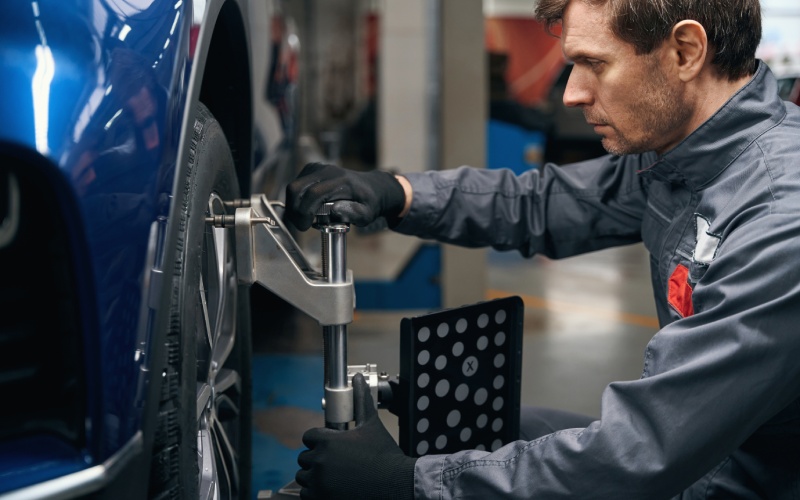
Wheel alignment focuses on the relationship between the tires, wheels, steering system, and suspension. During an alignment, a technician measures key angles such as toe, camber, and caster. Toe describes whether tires point slightly inward or outward when viewed from above. Camber describes how much a tire leans inward or outward when viewed from the front. Caster affects steering return and straight-line stability. If any angle moves outside specification, your vehicle may pull, wander, scrub tires, or feel less stable at highway speeds. Alignment concerns can begin after a hard pothole impact, curb contact, suspension work, tire replacement, or gradual wear in steering components. Mills Mitsubishi - Davenport uses trained technicians and modern equipment to check these angles accurately, not by guesswork. Our service center can perform alignment checks along with brake work, fluid service, tire service, and deeper system scans when needed. Because we are a factory-authorized Mitsubishi dealer serving the Quad Cities and surrounding area, we understand Mitsubishi specifications, while also servicing many other brands, including Nissan, Kia, Hyundai, Toyota, and Honda. A proper alignment helps tires roll with less resistance, supports confident handling, and reduces the chance of premature tire replacement caused by avoidable edge wear.
Symptoms: Rotation Problem or Alignment Problem?
- Likely tire rotation need: Tread depth is noticeably different between front and rear tires, but the vehicle still tracks straight.
- Likely tire rotation need: You hear mild tire noise that changes after rotation or notice uneven but gradual wear across positions.
- Likely alignment need: The vehicle pulls left or right on a level road when your hands are light on the wheel.
- Likely alignment need: The steering wheel is crooked while driving straight, especially after a curb strike or pothole impact.
- Possible alignment or tire issue: One tire edge is wearing rapidly, which can point to toe or camber concerns.
- Possible combined service need: New tires are being installed, and you want to protect tread life from the first mile.
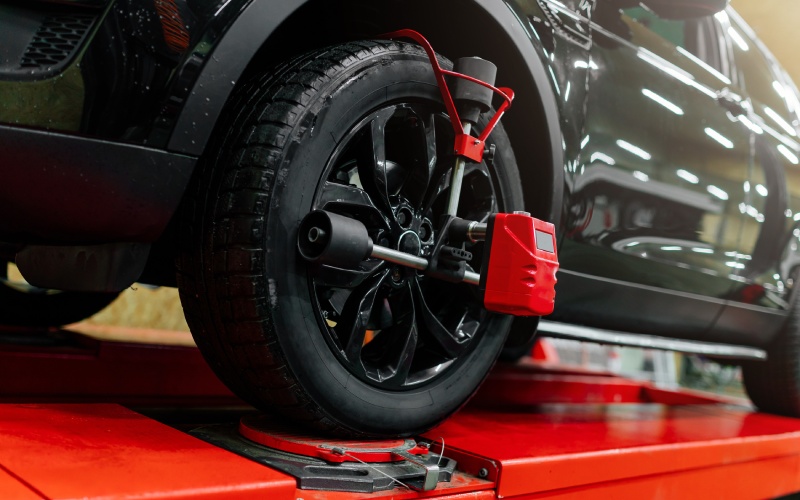
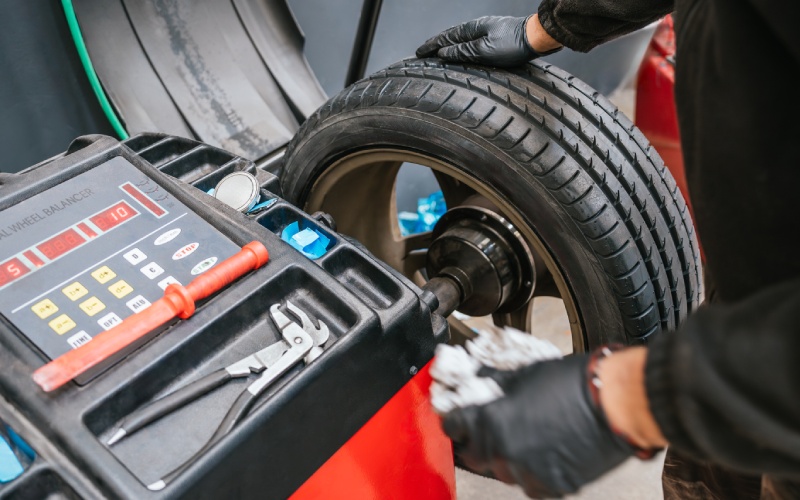
Symptoms can overlap, so a quick inspection is often the smartest move. A vibration may come from tire balance, wheel damage, uneven tread, or a suspension issue, while pulling can come from alignment, tire pressure, brake drag, or tire construction. Rotation is preventive maintenance; alignment is a precision adjustment. If you drive across Brady Street, Elmore Avenue, I-74, or I-80 and notice your vehicle no longer feels centered, do not wait for tire wear to become severe. A technician can measure tread depth, inspect tire shoulders, check pressure, and confirm alignment angles before recommending service.
FAQ: Tire Rotation and Wheel Alignment Questions
Do I need an alignment every time I rotate my tires?
No. Tire rotation is usually needed more often than alignment. However, if rotation reveals unusual edge wear, feathering, cupping, or a pull while driving, an alignment check is a good idea.
How often should wheel alignment be checked?
Many drivers choose an alignment check once a year, after a strong road impact, when installing new tires, or whenever steering feels off-center. Your owner's manual and driving habits can guide timing.
Can bad alignment ruin new tires?
Yes. Incorrect toe or camber can scrub tread quickly, sometimes on just one edge. Aligning the vehicle after tire installation helps protect the investment and keeps handling more consistent.
Can rotation fix a vehicle that pulls to one side?
Sometimes rotating tires may reduce a tire-related pull, but it will not correct suspension angles. If the pull remains after pressure and tire condition are checked, alignment diagnosis is the next step.
Do EVs and hybrids need rotation and alignment?
Yes. EVs and hybrids can be sensitive to tire wear because of instant torque, vehicle weight, and low-rolling-resistance tire designs. Routine rotation and alignment checks remain important.
Schedule Tire and Alignment Service with Confidence
If you are trying to decide between tire rotation and wheel alignment service in Davenport, IA, start with what you feel and what you see. Even tread wear with normal mileage usually points toward rotation. Pulling, a crooked steering wheel, rapid shoulder wear, or wandering usually points toward alignment. When both services are due, handling can improve while tire wear becomes easier to manage. Mills Mitsubishi - Davenport is located at 5401 Elmore Ave in Davenport, making our service center a convenient stop for local drivers, Quad Cities commuters, and visitors from nearby Iowa and Illinois communities. Our factory certified technicians service Mitsubishi vehicles as well as all makes and models, including diesel vehicles and EVs. We also maintain access to genuine OEM Mitsubishi parts through our parts department, along with knowledgeable support when components are needed. Scheduling is simple through our online service form, and our team can answer questions before your visit. For steering concerns, tire wear, maintenance planning, or a second opinion, contact our service department or schedule an appointment today. We will inspect your vehicle carefully, explain our findings clearly, and help keep your drive smooth, stable, and road-ready.
Make an Inquiry
* Indicates a required field
